
Hard water spots start as a cosmetic problem. Left on the glass for long enough, they can become a permanent one.
- Fresh spots sit on the glass and can be removed.
- Spots that bake on for months bond to the glass.
- Left long enough, minerals can etch the glass, and that is permanent.
- Removing spots early and protecting the glass is the best defense.
What etching actually is
Glass looks perfectly smooth, but under a microscope it is not. Minerals that dry on it repeatedly, in heat, can slowly attack that surface. The result is etching: a mark that is in the glass rather than on it.
Etched spots often look like faint outlines of the original water drops. They stay after a proper cleaning, and in sunlight they can scatter light and add glare.
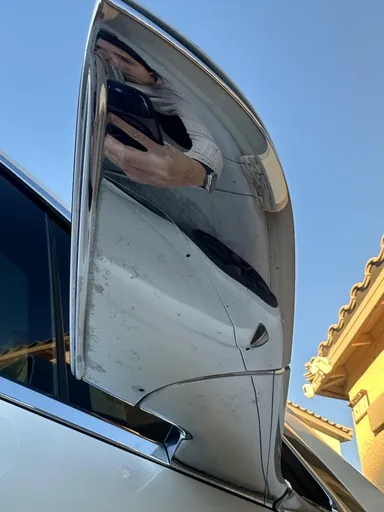
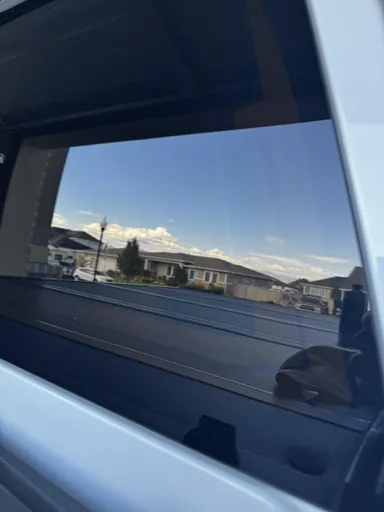
From spot to etch
What you’ll need
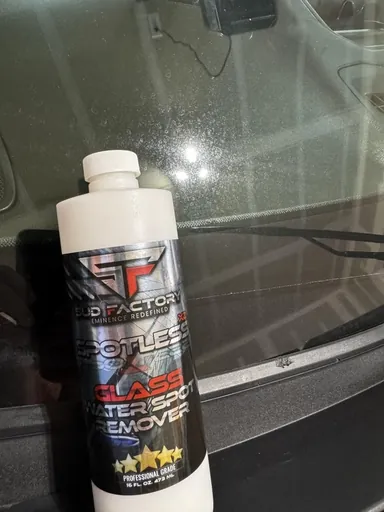
- Spotless X2
- Microfiber applicator pad
- Microfiber towels
- Flashlight for inspection
- Nitrile gloves
- Eye protection
- Day one: water dries and leaves minerals sitting on the glass.
- Weeks: more layers build up with every sprinkler run, rain or wash.
- Months: sun and heat bond the minerals to the glass.
- Years: minerals can etch into the glass surface itself.
Etching is damage to the glass, not something sitting on top of it. No cleaner can put back glass that’s been eaten away. Badly etched glass may need professional polishing, or replacing.
How to tell what you have
- Spots that come off with a remover were sitting on or bonded to the surface. Good news: the glass is fine.
- Outlines that stay after a proper cleaning, sometimes with a faint rough feel, are likely etching.
Catch it early
The best defense is not letting spots sit. Clean them off while they’re still on the surface with Spotless X2, then protect the glass so water beads off instead of drying there.
Spotless X2 is a strong acid cleaner: its Safety Data Sheet lists it as causing severe skin burns and eye damage. Wear gloves and eye protection, keep it off your skin, and read the label before you start. Every sheet is on our SDS page.
- Work on cool, dry glass in the shade. Start clean so you can see every spot.
- Use a quarter-sized dab of Spotless X2 on a microfiber applicator pad. A little covers a big area.
- Cross-hatch it over the spots, up and down then side to side. Heavy buildup may need a second pass.
- Wipe with a damp towel, then buff dry with a clean microfiber.
Hard water spots on car windows · Prevent spots after washing
Spot, bonded spot or etch: a quick test
Clean a small area with Spotless X2 and check it in direct light. If the spots are gone, they were on the surface. If they fade but don’t disappear, give it a second pass: heavy buildup can take more than one. If outlines still remain after that, and you may feel a slight roughness with a fingernail, you are probably looking at etching.
Common mistakes to avoid
Assuming every spot is etching. Most are still removable. Try a proper remover first.
Scrubbing with abrasives. That can scratch the glass and make things worse.
Waiting for the spots to get bad. Every week adds another layer.
Leaving sprinklers aimed at the car. That’s the fastest way to build spots.
A simple care schedule
| When | What to do |
|---|---|
| Every wash | Dry all glass before it can air-dry. |
| Weekly | Inspect the windshield in sunlight. |
| Every few months | Full clean plus protection with SFX1. |
Frequently asked questions
How long does it take for water spots to etch glass?
It depends on the water, the sun and how often the glass gets wet, so there is no fixed timeline. The longer spots sit and bake, the higher the risk, which is why removing them early matters.
Can etched glass be fixed?
Etching is damage to the glass itself, so cleaners can’t remove it. Light etching may be polished by a professional; severe etching can mean replacing the glass.
How do I know if my spots are etched?
If outlines stay after a proper cleaning with a water spot remover, and you can sometimes feel a slight roughness, it is likely etching.
Does insurance cover etched glass?
That depends on your policy and provider. Ask your insurer.
Can protection prevent etching?
Protection makes water bead and roll off, so less of it dries on the glass, which lowers the risk.