Not every water spot is the same. Some come off with a wash, some laugh at car wash soap, and some are already damage. Figuring out which one you’re looking at saves you time, money and your clear coat.
- Type 1 spots sit on top and often wash off.
- Type 2 spots are bonded; they need a remover like Dissolve X2.
- Type 3 spots have etched the clear coat and need paint correction.
- The fastest way to avoid Type 3 is not letting Type 2 sit.
How a spot moves from one type to the next
Every water spot starts as Type 1: minerals sitting on the clear coat. What turns it into Type 2 is time and heat. Each day in the sun bonds the minerals a little tighter, and new spots land on top of old ones.
Type 3 happens when minerals or acidic contaminants like bird droppings are left long enough to eat into the clear coat. At that point the spot isn’t on the paint anymore; it’s a small dent in it.
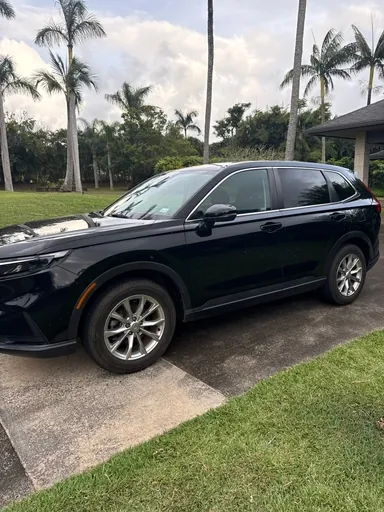
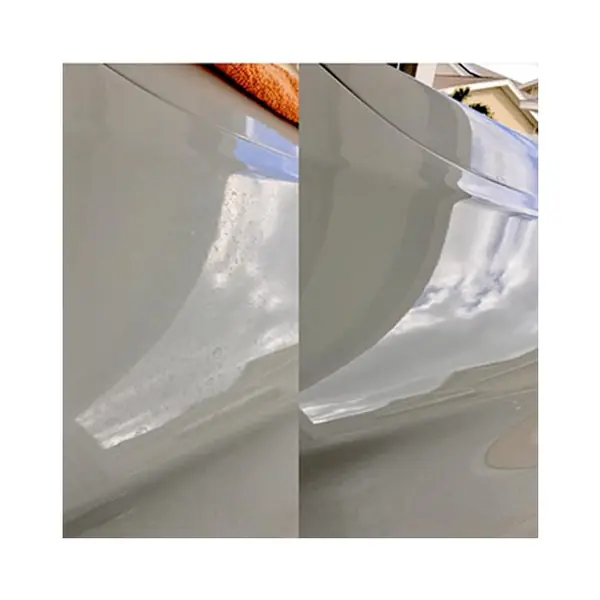
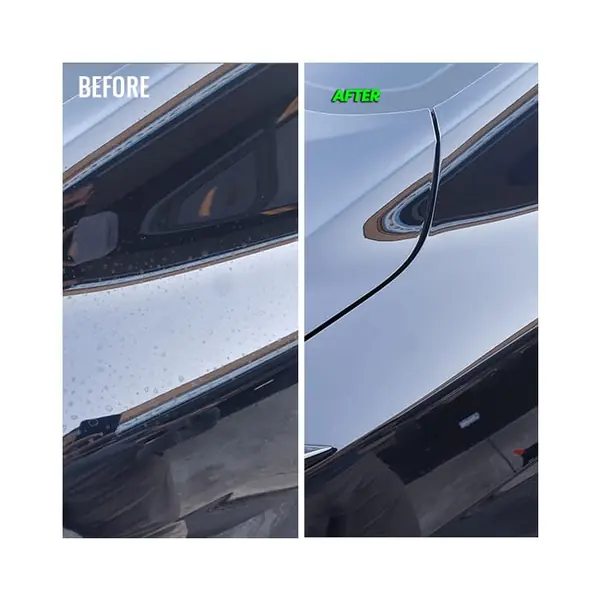
Type 1: Fresh mineral spots
These are the white rings that show up after a car dries in the sun or catches the sprinkler. The minerals are sitting on top of the paint. A wash and a proper dry often take care of them, and a quick wipe with a paint-safe remover takes care of the rest.
Type 2: Bonded spots and stains
Leave Type 1 spots long enough and heat and UV bake them on. Now they’re bonded to the clear coat and soap slides right over them. Red dirt, tree sap, tar, bugs and bird droppings behave the same way: the longer they sit, the harder they hold on. This is where most cars are, and where a dedicated remover earns its keep.
Type 3: Etched spots
Minerals and acidic droppings can eat into the clear coat itself, leaving a dull outline you can sometimes feel with a fingernail. No cleaner can put back clear coat that’s been etched away: that takes machine paint correction, and if it goes deep enough, a repaint. The best way to deal with Type 3 is never letting Type 2 sit that long.
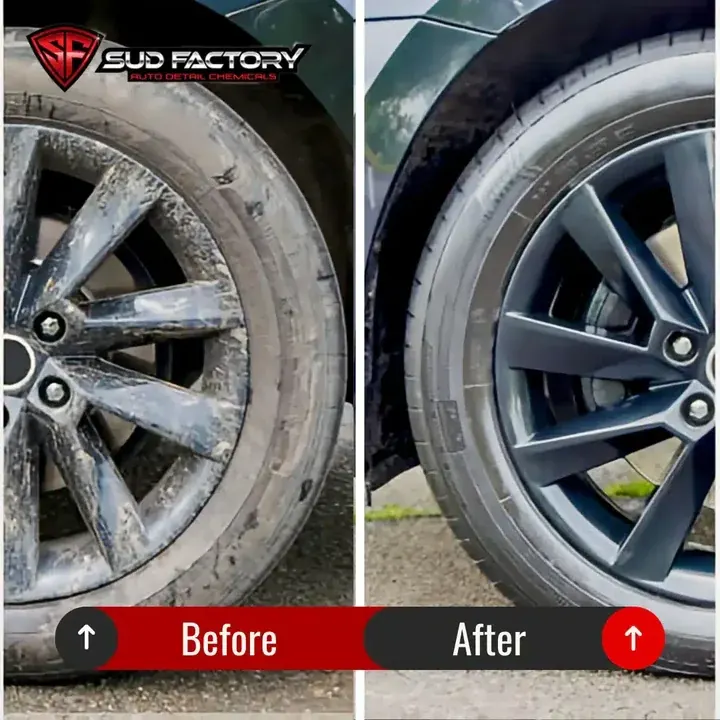
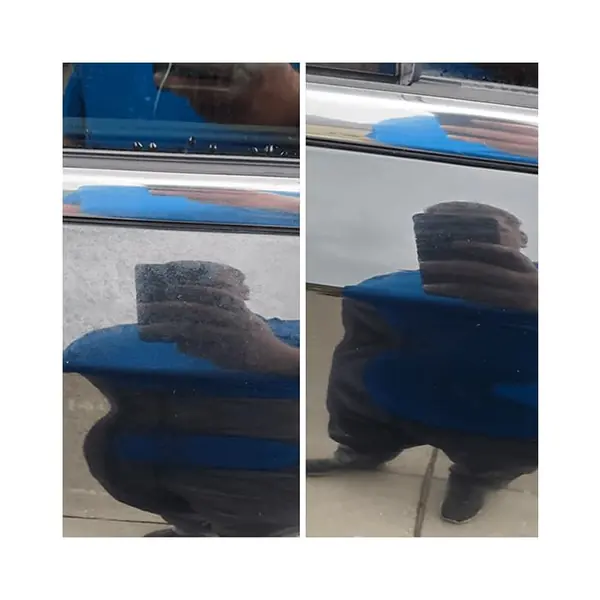
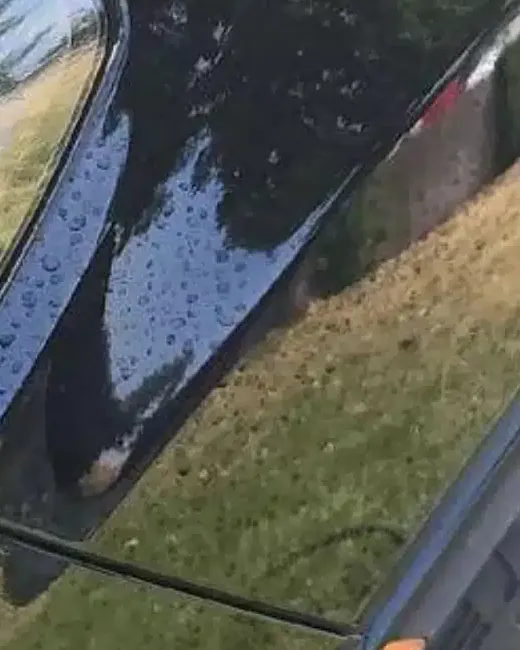 Before
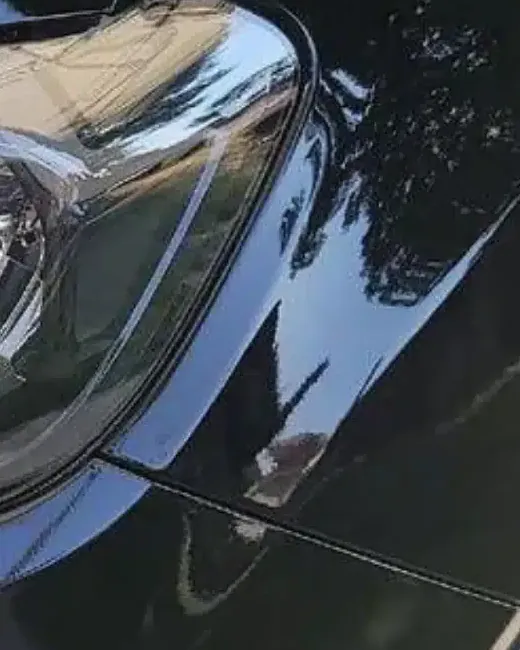 After
How to remove Type 1 and Type 2 spots
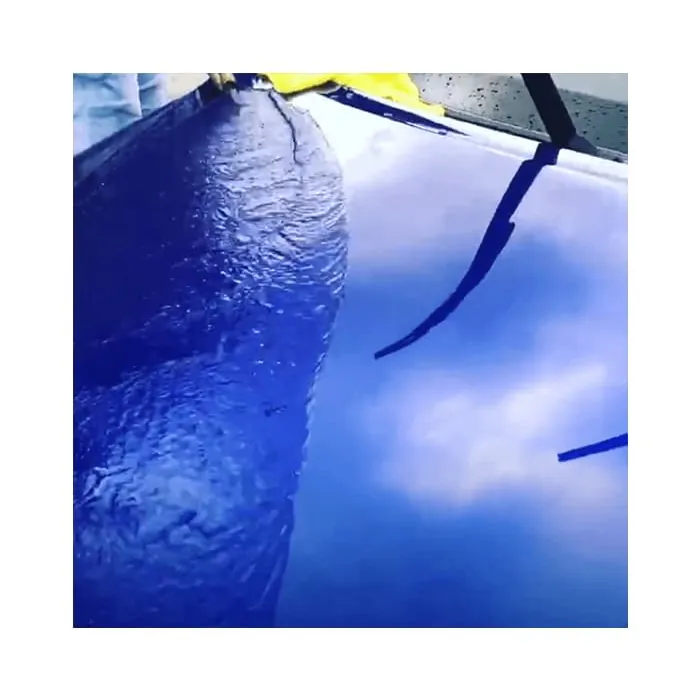
Dissolve X2 is made for this: it goes after the bonded stain itself and breaks it loose, with no abrasives and no machine.
Dissolve X2 is a strong acid cleaner: its Safety Data Sheet lists it as causing severe skin burns and eye damage. Wear gloves and eye protection, keep it off your skin, and read the label before you start. You can find every sheet on our SDS page.
What you’ll need
- Dissolve X2
- Microfiber applicator or towel
- Clean, damp microfiber towels
- Car wash soap and mitt
- Nitrile gloves
- Eye protection
- Wash and dry the car. Work on a cool panel in the shade.
- Apply a small amount to a microfiber applicator or towel.
- Work it over the stained area. Older, heavier spots may need a second pass.
- Wipe clean with a clean, damp microfiber towel and check the paint in good light.
Do one panel at a time and check it before you move on. Fresh spots usually come off in one pass; spots that are a year or more old can take extra passes.
What it’s safe on
Dissolve X2 is safe on clear coat and works on matte paint, vinyl wraps, wheels, chrome and plastic and rubber trim, plus boat gelcoat. It’s the same bottle for water spots, red dirt, rust stains, tar, sap, bugs and bird droppings.
Lock it in
Clean paint picks up new spots fast if water can sit on it. Follow up with SFX1 for a wet-look shine that makes water bead off, for up to 12 months. The Restore & Shine Kit has both.
How to tell which type you have
Wash and dry the car, then look at the spots in direct sunlight. If they wipe off with a damp towel, they were Type 1. If they stay but come off with Dissolve X2, they were Type 2. If a faint outline remains after a second pass, and you may feel it with a fingernail, it’s Type 3. Working through the types in this order means you only reach for a polisher when you truly need one.
Common mistakes to avoid
Polishing first. Try a remover before taking clear coat off.
Letting sprinkler spots sit. Sprinkler water is a top cause of bonded spots.
Working on hot paint. Products dry too fast to work.
Using household vinegar mixes on paint. Use a product made for clear coat.
A simple care schedule
| When | What to do |
|---|---|
| Every wash | Dry the car instead of letting it air-dry. |
| Weekly | Spot-treat new marks while they’re Type 1 or 2. |
| Every few months | Full decontamination with Dissolve X2, then SFX1. |
Frequently asked questions
Can Type 3 spots be fixed at home?
They need machine paint correction, usually by a professional.
Do ceramic coatings stop all water spots?
They make water bead off so fewer spots form, but minerals can still dry on top. Remove them while fresh.
Stains off. Not covered up.
Dissolve X2 takes bonded spots and stains off paint, wheels and trim by hand.