
How to Remove Hard Water Spots From an RV (Fiberglass, Windows and Chrome)
RVs spot easily because campsite water is often hard and the panels are large. Wash a section in the shade, then match the product to the surface. Dissolve X2 handles painted, clear-coated, gelcoat and fiberglass sidewalls. Spotless X2 is for confirmed glass windows. Keep removers off roofs and awnings unless the maker says they are OK.
The short answer and surface table
| Surface | Use | Notes |
|---|---|---|
| Sidewalls, gelcoat, fiberglass | Dissolve X2 | About 30 seconds; do not let dry; work 2×2 ft sections |
| Vinyl graphics and decals | Dissolve X2 gently | Test; do not lift edges |
| Confirmed glass windows | Spotless X2 | 2-3 passes for harder stains; damp preferred |
| Acrylic or polycarbonate windows | Maker cleaner only | Hard stop for glass chemistry |
| Chrome and metal trim | Dissolve X2 as directed | Cool metal; control drips |
| Rubber or TPO roof and awning fabric | Usually off-limits | Follow the roof or awning maker |
Why campground water spots RVs
Well water and hard municipal hookups leave minerals when rinse water dries on hot sidewalls. Huge panels dry faster than a compact car hood. Sprinkler overspray at a campsite adds another mineral source overnight. Section work matters more than buying a larger bottle.
Sidewalls, gelcoat and fiberglass: Dissolve X2
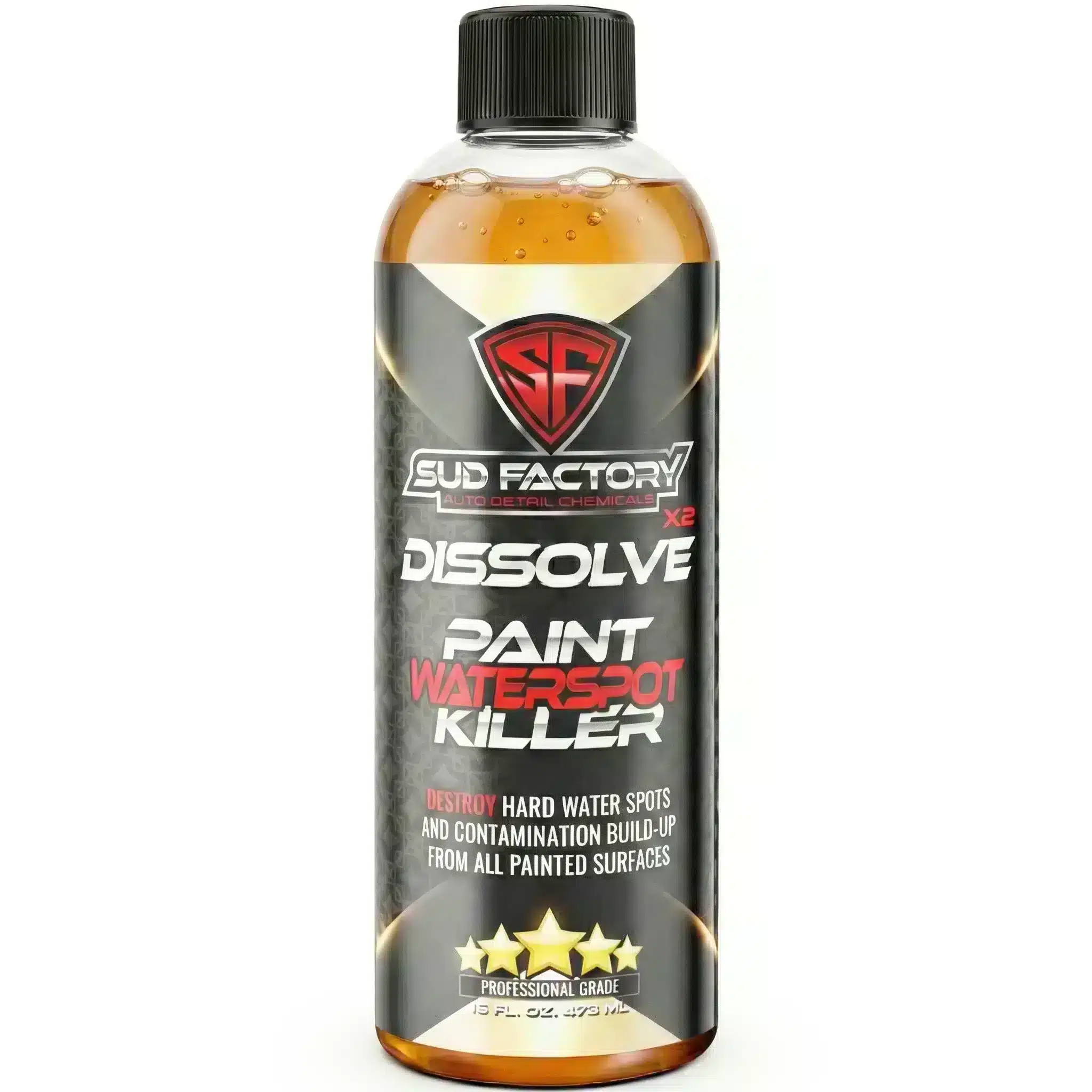
Dissolve X2 is non-abrasive buffered ammonium bifluoride. Put it on a pad, dwell about 30 seconds without drying, wipe damp, rinse and dry. Take a second short pass if a ring remains. If the stain still will not come off, stop chemical escalation. Test older chalky finishes before treating a full bay.
Coating compatibility does not mean skin safety. Dissolve X2 contains buffered ammonium bifluoride (ABF). Its SDS uses the signal word “Danger” and states “Causes severe skin burns and eye damage.” Wear protective gloves and eye protection, work with ventilation, and follow the label and Dissolve X2 SDS PDF.
Keep Dissolve X2 off glass and glass mirrors. Plastic mirrors are OK, but verify the material rather than guessing. Test wraps, PPF and finishes without clear coat before proceeding. See the matte-paint, PPF, wrap and ABF safety guide for surface-specific limits.
Vinyl graphics and decals
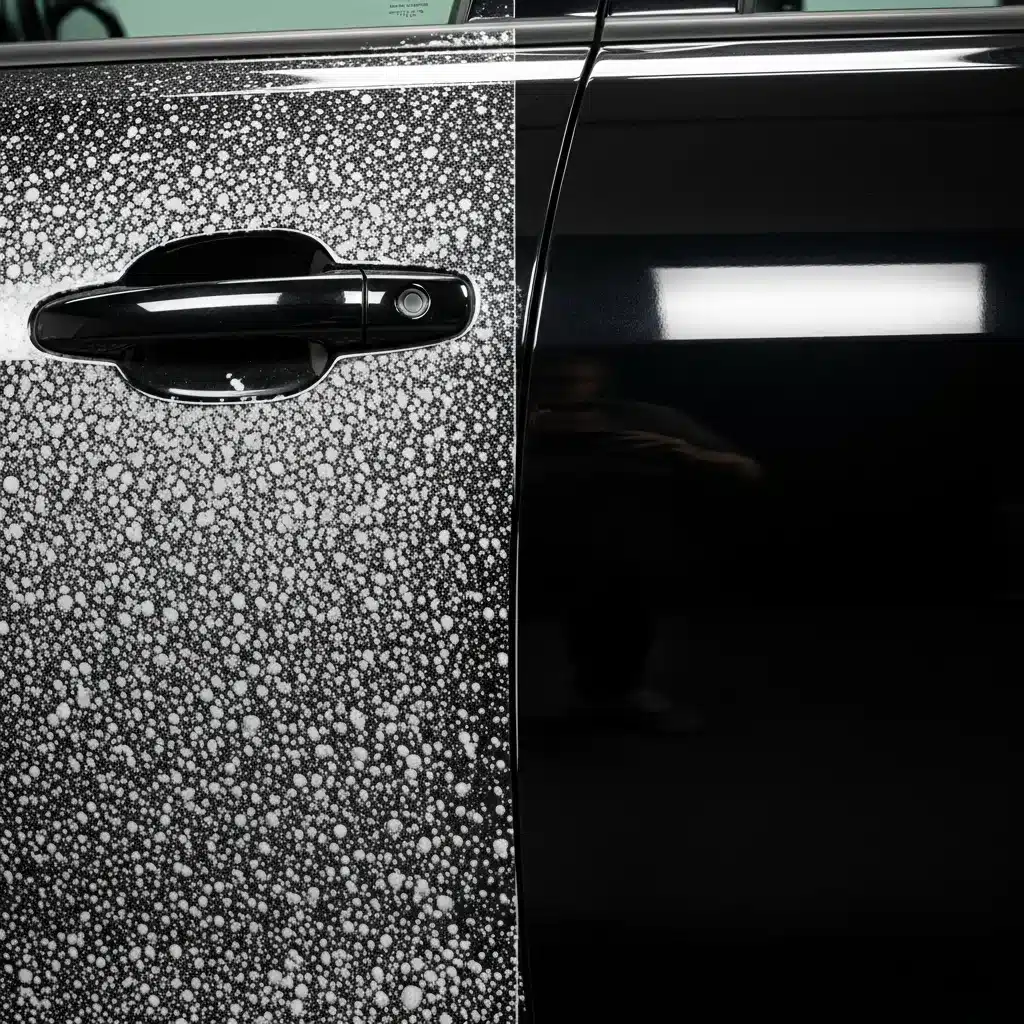
Go gentle. Do not flood edges or pry at lifting corners. Test an inconspicuous graphic edge first. Soft pads and controlled rinse matter more than pressure. If a graphic is already failing, stop and protect what remains rather than forcing chemistry under a peel.
Windows: confirm glass vs acrylic
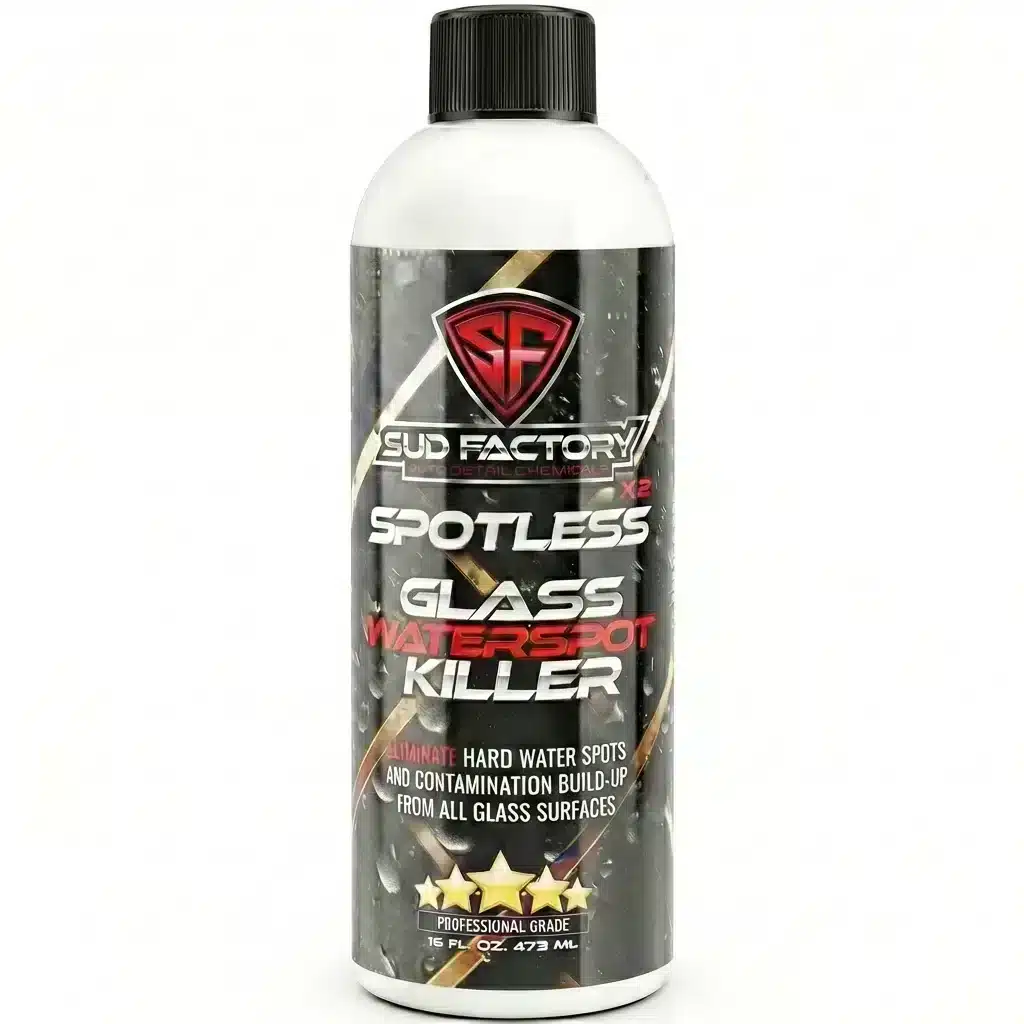
Many RV windows are glass; some jalousies and inserts are acrylic or polycarbonate. On confirmed glass, use Spotless X2 with a little damp preferred and no dwell. Harder stains can need 2-3 passes. Optional polisher tip is medium speed with a white pad. Untinted side only when tinted. Keep Spotless off paint and natural stone.
If the window is acrylic or polycarbonate, follow the window maker cleaner. Do not assume glass chemistry is safe. Related glass reading: vinegar or CLR vs glass remover and house-window sprinkler spots.
Chrome and metal trim
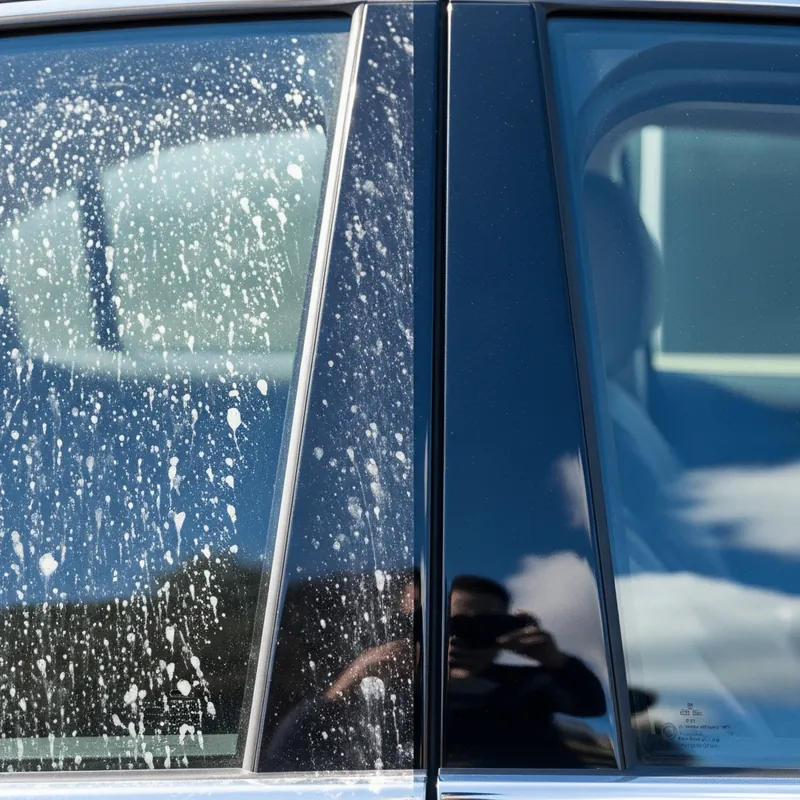
Use Dissolve X2 on cool chrome and compatible metal trim with drip control. Avoid steel wool. The same short dwell applies; do not invent longer dwells for stubborn RV chrome rings.
Roofs and awnings: usually off-limits
There is no locked claim that Dissolve X2 or Spotless X2 is safe on every RV roof membrane, Filon, TPO or awning fabric. Keep removers off those surfaces unless the maker explicitly allows the chemistry you plan to use. Roof care is a separate system from sidewall mineral removal.
Prevention for travelers
Wash and dry in shade. Work 2×2 ft sections so product and rinse water do not bake. Optional inline filters help some travelers; they are useful, not mandatory. Park clear of sprinklers when you can. Dry mirror caps, badges and window frames where drops hide.
SFX1 aftercare
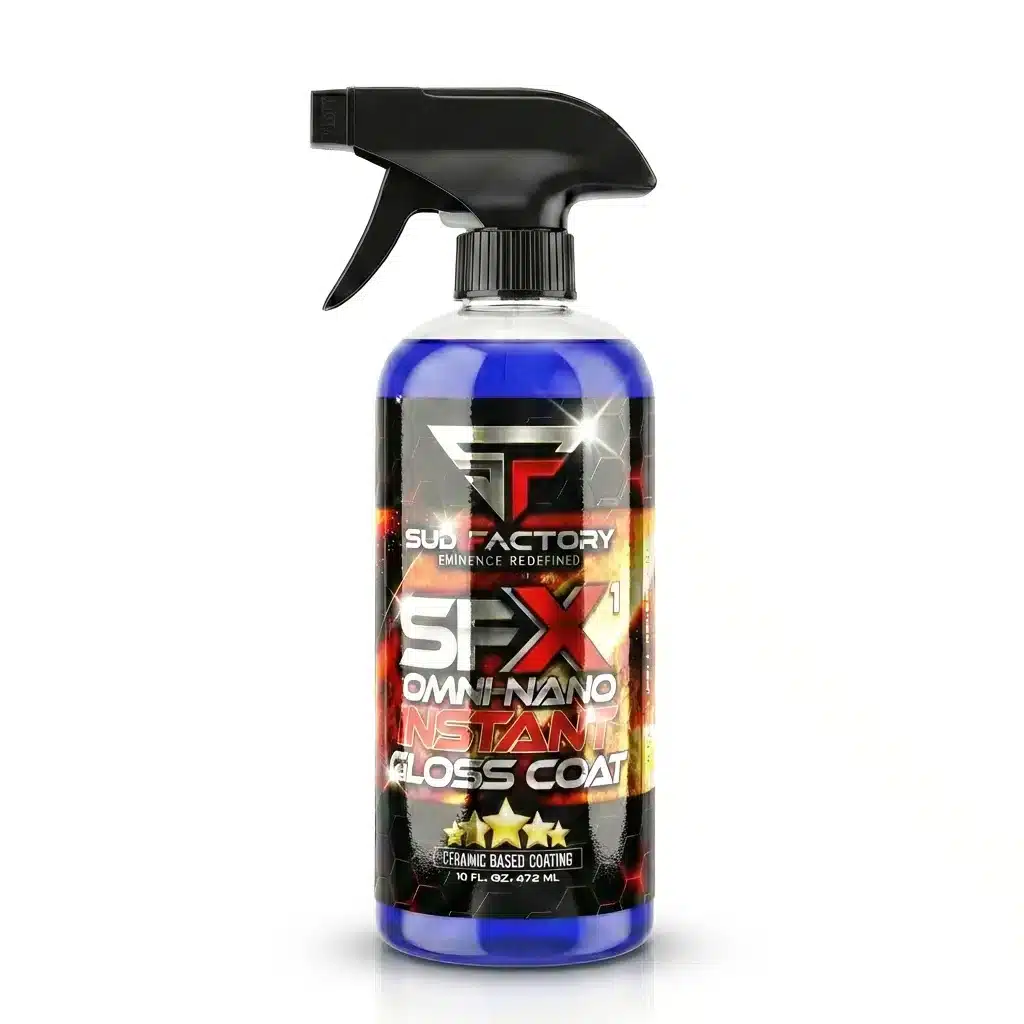
SFX1 is protection, not a remover for the rings already present. Apply it after cleaning according to its directions. It works on all exterior surfaces, needs no buffer, lasts up to about 12 months and will not change a matte finish. That upper limit is not a promise that every surface will need no maintenance for a year.
Wash in shade, keep panels cool and dry before droplets bake. Move away from sprinklers when practical, including overnight overspray. Treat fresh deposits early rather than allowing repeated wet-dry cycles to build layers. Protection supports maintenance; it does not make hard water evaporate without leaving minerals.
Sectioning strategy for long sidewalls
A thirty-foot sidewall is not a hood-sized job. Mark mental or chalk section breaks about two feet square. Complete wash, Dissolve application, wipe, rinse and dry in that section before moving on. If sun reaches the panel mid-job, stop and create shade or wait. Product that dries on hot fiberglass is the failure mode this process is designed to avoid.
Ladder safety matters as much as chemistry. Keep both hands free for controlled pad work when you can. Do not stretch across a wet panel with a dripping applicator. Bring a rinse bottle and clean towels to the work height so you are not climbing with product open on the wall.
Graphics packages and painted accent bands can respond differently from surrounding gelcoat. Test each. If a decal edge is lifting, work away from the edge and avoid flooding underneath. Campground neighbors may offer vinegar folklore; stay with surface-matched products and maker guidance for plastics rather than improvising longer acid soaks on a rolling home.
After sidewalls and glass are clean, apply SFX1 on exterior surfaces you intend to protect. Revisit beading after a few trips. Travel miles, brush bays and hard washes can shorten how long strong beading lasts within the up-to-about-12-months claim.
Bring more clean towels than you think you need. Large sidewalls consume drying capacity quickly, and a damp contaminated towel will redeposit minerals as haze. Rotate towel faces the same way you would on a black car hood. If a campsite only offers hard hose water, plan shade and sectioning before the first soap pass rather than improvising mid-wall when the panel is already flashing dry.
Keep a dedicated glass towel separate from sidewall towels so polishing residue from Spotless X2 never transfers onto fiberglass graphics during the same wash day.
What to buy
Dissolve X2 is $39.99 and has 850 reviews. Spotless X2 is $39.99 and has 1,240 reviews. Choose the paint remover for painted panels, the glass remover for windows, and SFX1 for protection after removal; SFX1 has 540 reviews.
The Ultimate Bundle includes Dissolve X2, Spotless X2 and SFX1 for $74.99. If only one surface is spotted, there is no need to buy a second remover for that job. Paint plus protection and glass plus protection are useful pairings, but compare the current bundle options on the product pages rather than assuming the same price for every pairing.
Shipping is free on orders over $49.99 and $4.99 under that threshold; expedited shipping is $19.99. Sud Factory ships to all 50 states, DC and military addresses. Read the shipping policy for the current terms. The 30-day money-back guarantee has a return-shipping condition: the customer pays unless the item arrived damaged. See the returns policy before ordering.
Sud Factory was founded in 2019 and is based in Hawaii. The existing site reports 500,000+ bottles shipped; that is a brand-level figure, not a result rate for this specific procedure. The reviews and existing customer photos help show the kinds of surfaces customers have treated, but a photo cannot establish the condition of your own finish.
For a surface-based overview, use the best water spot remover for cars guide. For formula and use differences, see Dissolve X2 vs Chemical Guys and Spotless X2 vs Bio-Clean. These are related comparisons, not a claim that this article ran a head-to-head laboratory test.
Read how-to-use before first application. Boat windows and gelcoat guidance in this batch is a related multi-surface sibling once live.
FAQ
Why do RVs spot so badly?
Campsite water is often hard and RV panels are large, so rinse water dries into mineral rings quickly, especially in sun.
What is the surface chart in short form?
Dissolve X2 for sidewalls, gelcoat and fiberglass; Spotless X2 for confirmed glass; maker cleaners for acrylic; usually keep removers off roofs and awnings.
Glass vs acrylic RV windows?
Confirm the material. Spotless X2 is for glass. Acrylic and polycarbonate need maker-approved cleaners; there is no locked acrylic-safe claim here.
How do I use Dissolve on fiberglass sidewalls?
Cool shade, pad application, about 30 seconds without drying, damp wipe, rinse and dry. Work small sections. Second short pass if needed, then stop if the mark remains.
How do I use Spotless on glass?
Damp preferred, no dwell, 2-3 passes for harder stains. Optional medium speed white pad. Untinted side only when tinted.
How should I section large panels?
Work about 2×2 ft areas so product and rinse water do not dry on hot sidewalls. Finish one section before starting the next.
What prevention habits help travelers?
Shade washing, immediate drying, optional filters, parking clear of sprinklers and SFX1 after cleaning for up to about 12 months of help.
What about vinyl graphics?
Test first, stay gentle, and do not lift edges. Stop if graphics are already peeling.
What does it cost?
Dissolve X2, Spotless X2 and SFX1 are each $39.99. The Ultimate Bundle is $74.99. Shipping is free over $49.99, with a 30-day money-back guarantee subject to the returns policy.
Can I put removers on the rubber roof?
Not without maker approval. This guide keeps roofs and awning fabric off-limits by default.