
How to Remove Tar, Tree Sap and Bugs From Car Paint Without Hurting Clear Coat
Tar, tree sap and dried bugs bond to clear coat. Scrubbing them dry drags grit and grinds swirls into the paint. Wash loose dirt first, work on a cool panel in the shade, and use Dissolve X2 as a clear-coat-safe decontaminant. Heavy industrial tar or weeks-old sap may still need a dedicated solvent; Dissolve does not replace every solvent on earth.
The short answer
- Wash grit away before touching contamination.
- On cool paint, apply Dissolve X2 on a pad for about 30 seconds without letting it dry.
- Wipe damp, rinse and dry. Take a second short pass if residue remains.
- Do not scrape with fingernails or plastic cards as the first move.
- Keep Dissolve off glass; use Spotless X2 for glass. Re-protect with SFX1 afterward.
Why dry scrubbing fails
Dried bug guts and sap act like adhesive filled with grit. Wiping dry scrapes that grit across clear coat. Circular scrubbing makes the damage more visible, especially on dark paint. Softening or dissolving the contamination first is the safer order.
| Contamination | Better first move | Avoid |
|---|---|---|
| Bug guts | Wash, then Dissolve X2 on cool paint | Dry scraping |
| Tree sap | Dissolve X2 short dwell; second pass if needed | Prying with hard tools first |
| Road tar speckles | Dissolve X2 as directed | Assuming one product clears every industrial tar grade |
| Bugs on glass | Spotless X2 path | Dissolve X2 on glass |
Dissolve X2 for tar, sap and bugs
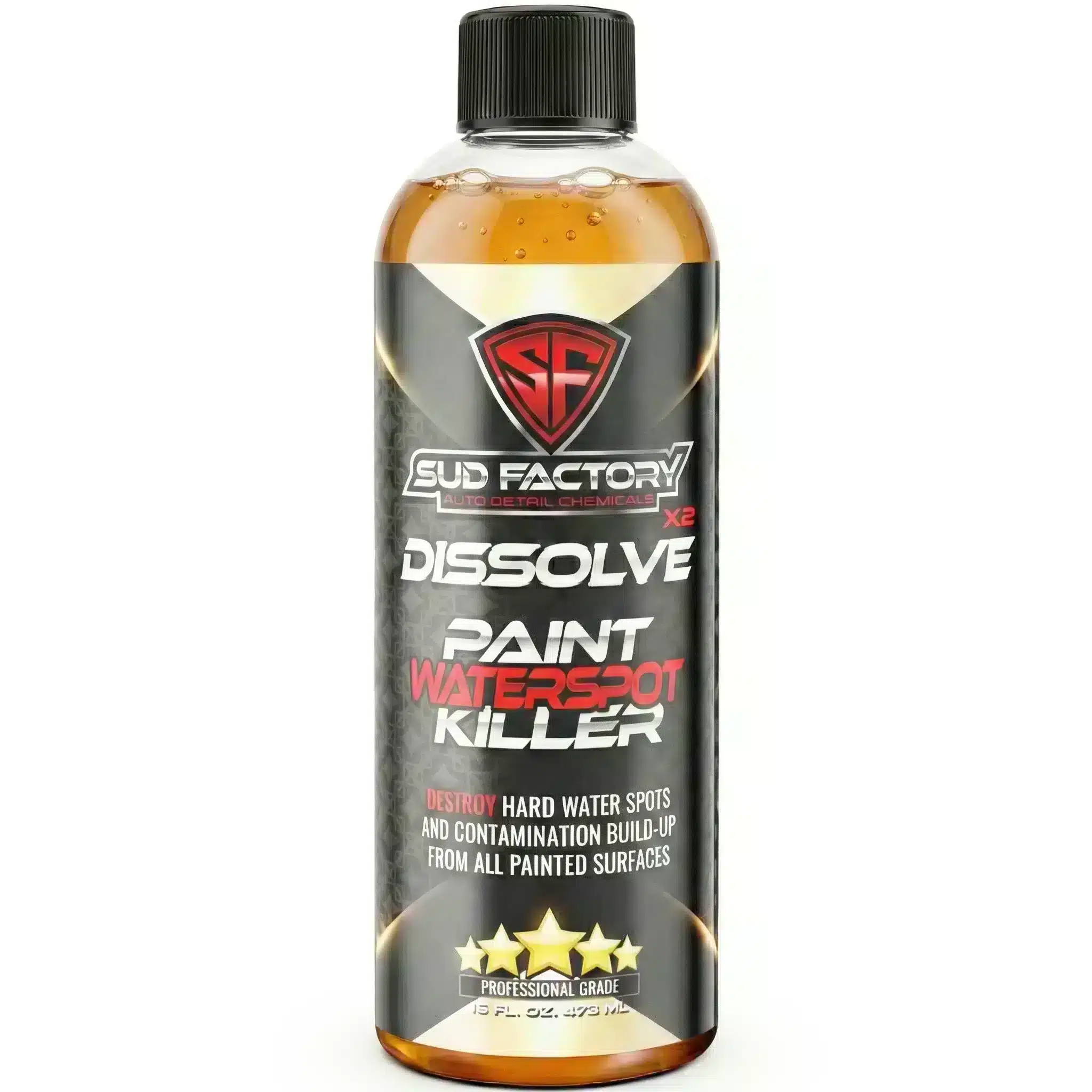
Dissolve X2 is a non-abrasive, buffered ammonium bifluoride paint remover that also removes red dirt, rust, tar, sap and bugs. It is safe on clear coat, ceramic coatings, matte paint, PPF and vinyl wraps when used as directed; test wraps, PPF and finishes without clear coat. Plastic mirrors are OK; glass and glass mirrors are not.
Coating compatibility does not mean skin safety. Dissolve X2 contains buffered ammonium bifluoride (ABF). Its SDS uses the signal word “Danger” and states “Causes severe skin burns and eye damage.” Wear protective gloves and eye protection, work with ventilation, and follow the label and Dissolve X2 SDS PDF.
Keep Dissolve X2 off glass and glass mirrors. Plastic mirrors are OK, but verify the material rather than guessing. Test wraps, PPF and finishes without clear coat before proceeding. See the matte-paint, PPF, wrap and ABF safety guide for surface-specific limits.
Related: red dirt stain removal and Dissolve X2 vs Chemical Guys.
Step-by-step on paint
Read how-to-use. Wash the car and rinse grit. Move into shade. Put Dissolve X2 on a microfiber applicator pad. Work a small section with light pressure. Allow about 30 seconds and do not let it dry. Wipe with a damp microfiber, rinse and dry. If residue remains, make another short pass rather than increasing dwell indefinitely.
If contamination still will not budge after directed short passes, stop and escalate carefully. Very heavy tar may need a dedicated tar solvent. Do not grind harder with a dry towel to force a cosmetic win.
Ceramic, matte, PPF and wraps
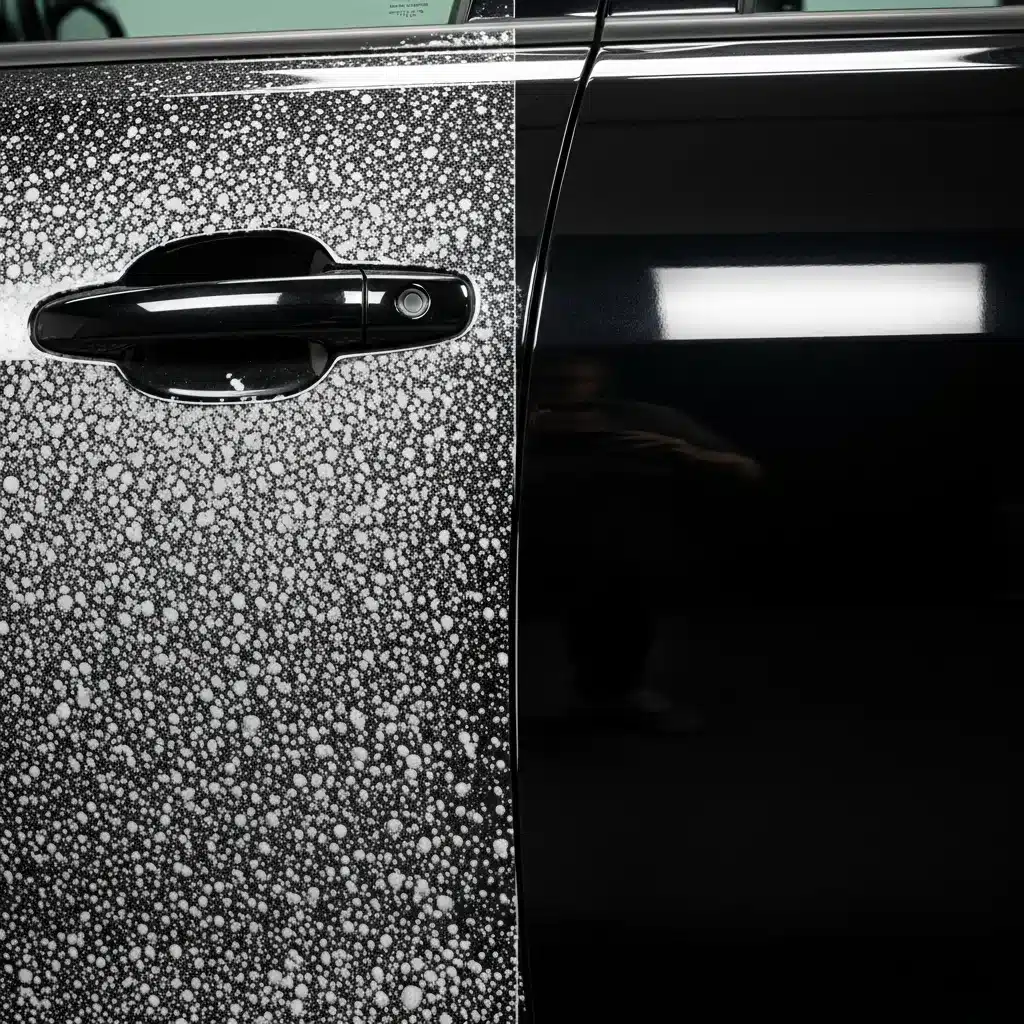
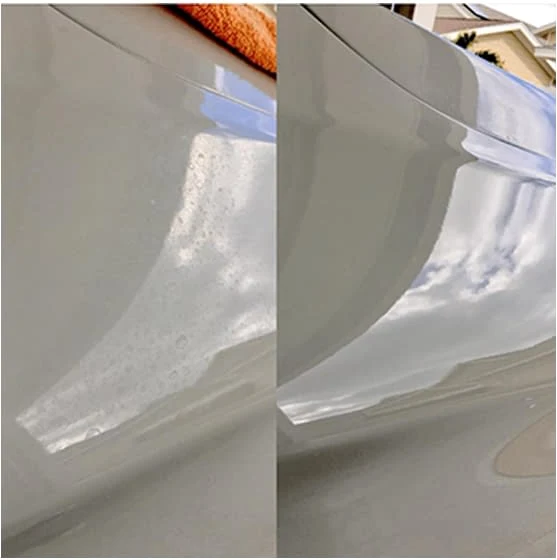
The same directed Dissolve method applies with a test spot. Fresh ceramic coatings follow installer guidance before chemical maintenance. Matte, PPF and wrap limits are covered in the matte, PPF and wrap safety guide and the ceramic-coated car guide. Test rather than assuming every film behaves like factory clear coat.
Bugs on glass
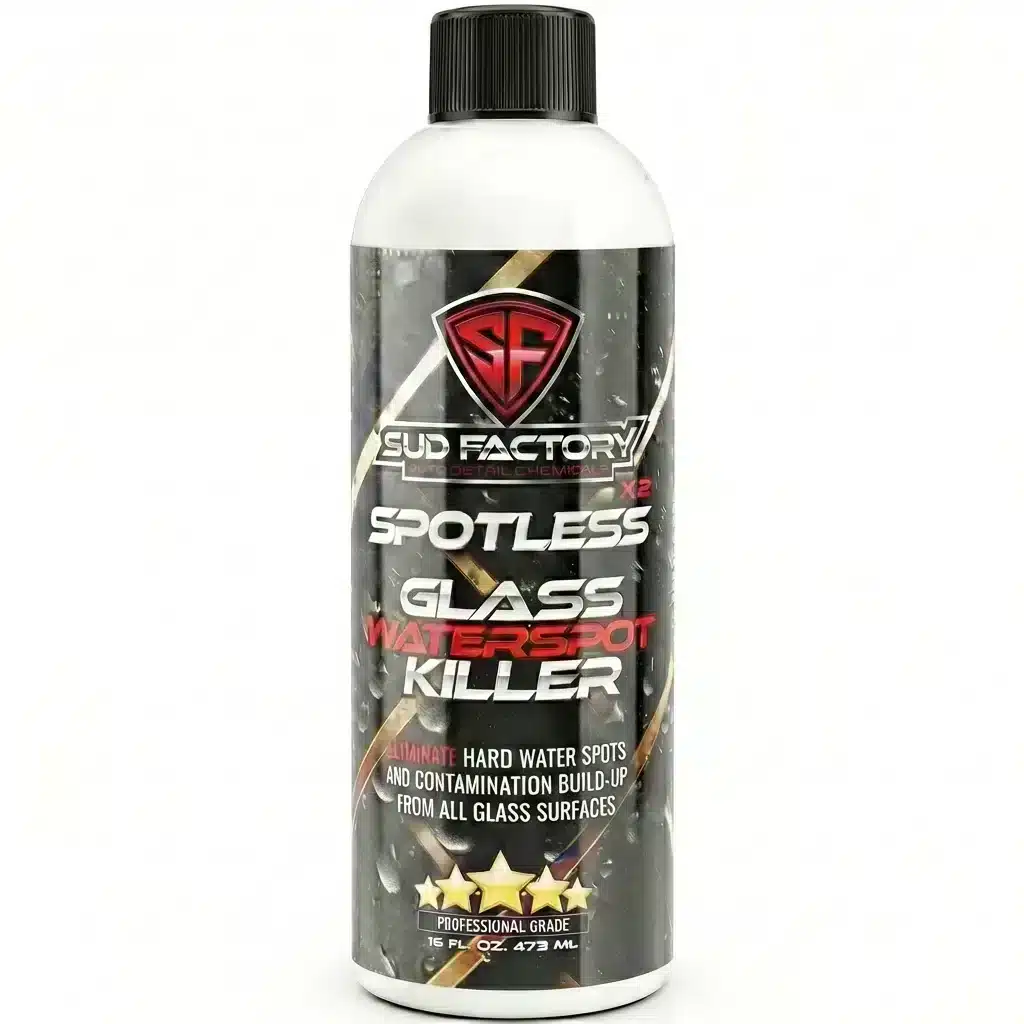
Bugs and minerals on glass are a Spotless X2 job. Prefer a little damp, no dwell, 2-3 passes for harder stains. Optional polisher tip for Spotless only: medium speed with a white pad. Untinted side only. Keep Spotless off paint and natural stone.
When to use a dedicated tar solvent instead
Fair limit: heavy industrial asphalt tar or long-cured sap may not fully release with a short Dissolve pass. A dedicated tar solvent can be the next careful step. This guide does not invent head-to-head scores against any named tar solvent and does not claim Dissolve replaces every solvent. Stop if residue will not budge and escalate without dry scraping.
Protect with SFX1
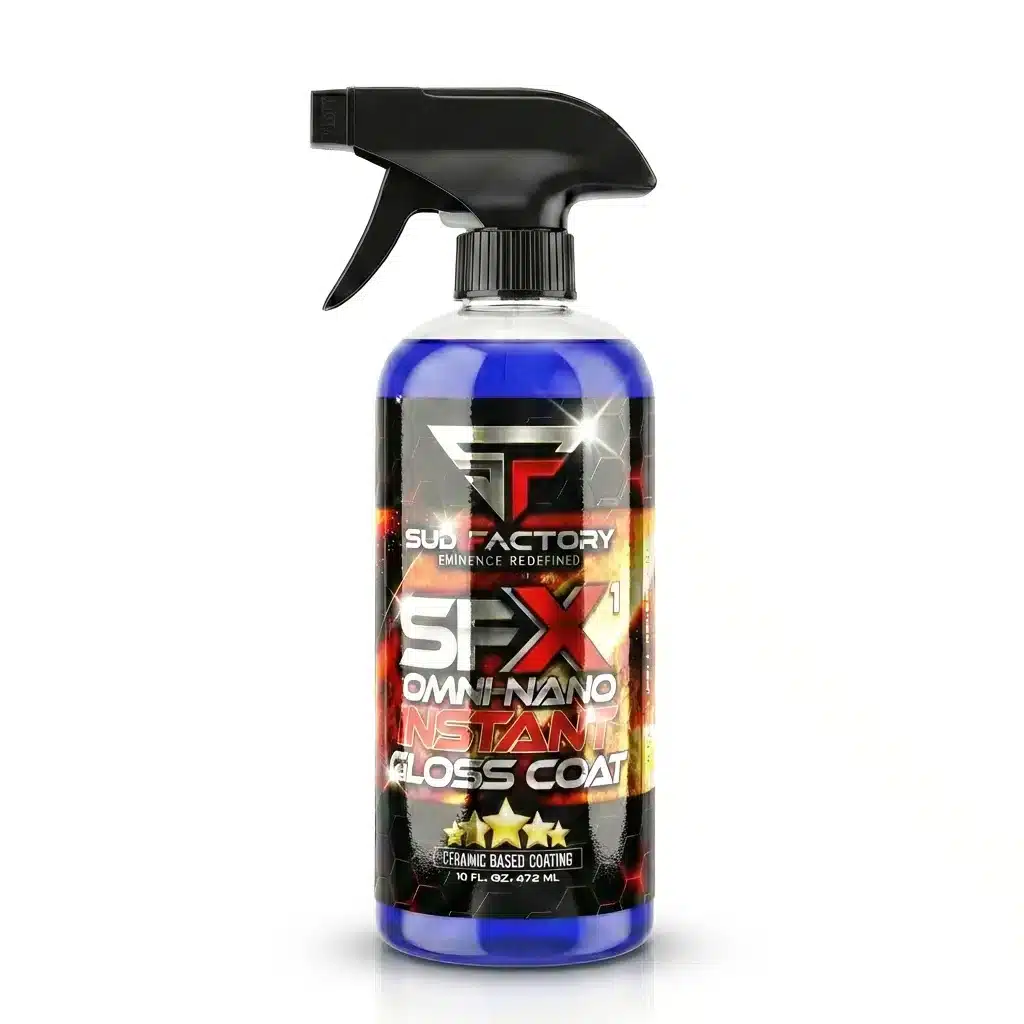
SFX1 is protection, not a remover for the rings already present. Apply it after cleaning according to its directions. It works on all exterior surfaces, needs no buffer, lasts up to about 12 months and will not change a matte finish. That upper limit is not a promise that every surface will need no maintenance for a year.
Wash in shade, keep panels cool and dry before droplets bake. Move away from sprinklers when practical, including overnight overspray. Treat fresh deposits early rather than allowing repeated wet-dry cycles to build layers. Protection supports maintenance; it does not make hard water evaporate without leaving minerals.
Removers can thin wax or sealant in the worked area. Re-protect clean paint with SFX1 after decontamination.
Bumper and leading-edge tactics
Bug graves collect on bumpers, mirrors and leading edges. Soften the field with a wash first so loose dirt leaves. Then work Dissolve X2 in small patches across the bumper rather than coating the entire cover at once. Cool plastic bumper covers still need the no-dry rule. Hot parking-lot plastic shortens your safe working time.
Sap under trees often appears as raised dots that look removable by fingernail. Resist that urge. A short Dissolve dwell on a pad under the droplet is safer than carving clear coat. Multiple sap dots can be treated section by section with clean pad faces so you are not spreading softened sap into clean paint.
Tar speckles from fresh roadwork vary in toughness. Many driveway cases respond to Dissolve X2. If a thick asphalt smear remains after directed short passes, switch to a dedicated tar solvent carefully and keep that solvent off sensitive trim unless its label allows it. Honest limits protect both the finish and trust.
After the bumper is clean, inspect glass for bug film and use Spotless X2 there. Re-protect paint with SFX1 so the next trip starts with a maintained surface rather than bare clear coat in the impact zone.
What to buy
Dissolve X2 is $39.99 and has 850 reviews. Spotless X2 is $39.99 and has 1,240 reviews. Choose the paint remover for painted panels, the glass remover for windows, and SFX1 for protection after removal; SFX1 has 540 reviews.
The Ultimate Bundle includes Dissolve X2, Spotless X2 and SFX1 for $74.99. If only one surface is spotted, there is no need to buy a second remover for that job. Paint plus protection and glass plus protection are useful pairings, but compare the current bundle options on the product pages rather than assuming the same price for every pairing.
Shipping is free on orders over $49.99 and $4.99 under that threshold; expedited shipping is $19.99. Sud Factory ships to all 50 states, DC and military addresses. Read the shipping policy for the current terms. The 30-day money-back guarantee has a return-shipping condition: the customer pays unless the item arrived damaged. See the returns policy before ordering.
Sud Factory was founded in 2019 and is based in Hawaii. The existing site reports 500,000+ bottles shipped; that is a brand-level figure, not a result rate for this specific procedure. The reviews and existing customer photos help show the kinds of surfaces customers have treated, but a photo cannot establish the condition of your own finish.
For a surface-based overview, use the best water spot remover for cars guide. For formula and use differences, see Dissolve X2 vs Chemical Guys and Spotless X2 vs Bio-Clean. These are related comparisons, not a claim that this article ran a head-to-head laboratory test.
FAQ
Why does scrubbing dry bugs or sap cause swirls?
Dried contamination holds grit. Dry wiping drags that grit across clear coat and creates scratches, especially on dark paint.
Softening vs dissolving vs scraping?
Wash first, then use a clear-coat-safe decontaminant such as Dissolve X2. Scraping is a last resort after chemistry, not the opening move.
Will Dissolve X2 remove tar, sap and bugs?
Yes. Dissolve X2 also removes red dirt, rust, tar, sap and bugs while remaining non-abrasive on paint when used as directed.
What is the step-by-step on paint?
Cool shade, pad application, about 30 seconds without drying, damp wipe, rinse and dry. Second short pass if needed. Then stop or escalate carefully.
What if residue remains?
Take one more short directed pass. If it still will not release, stop grinding and consider a dedicated tar solvent for heavy cases.
What about ceramic, matte, PPF and wraps?
Safe when used as directed; test wraps, PPF and finishes without clear coat. Follow installer guidance on fresh ceramic coatings.
What about glass and plastic trim?
Keep Dissolve X2 off glass; use Spotless X2 on glass. Plastic mirrors are OK for Dissolve when confirmed. Control product on plastic trim edges.
Why re-protect with SFX1?
Decontamination can thin wax or sealant. SFX1 lasts up to about 12 months, needs no buffer and works on all exterior surfaces after cleaning.
What does it cost?
Dissolve X2, Spotless X2 and SFX1 are each $39.99. The Ultimate Bundle is $74.99. Shipping is free over $49.99, with a 30-day money-back guarantee subject to the returns policy.
Does Dissolve replace every tar solvent?
No. It removes tar, sap and bugs as locked, but heavy industrial tar may still need a dedicated solvent. No head-to-head lab claim is made here.