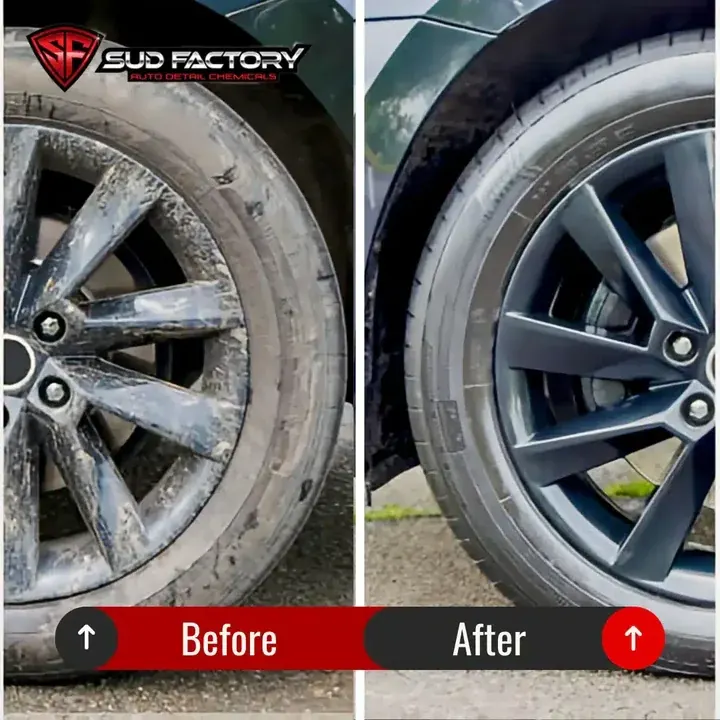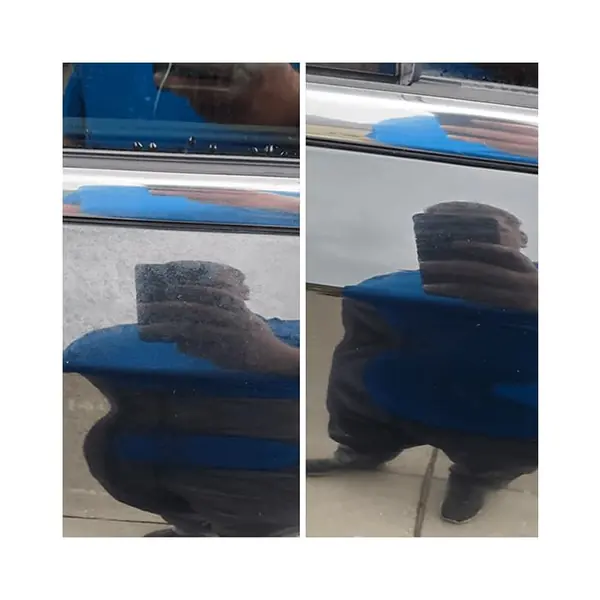
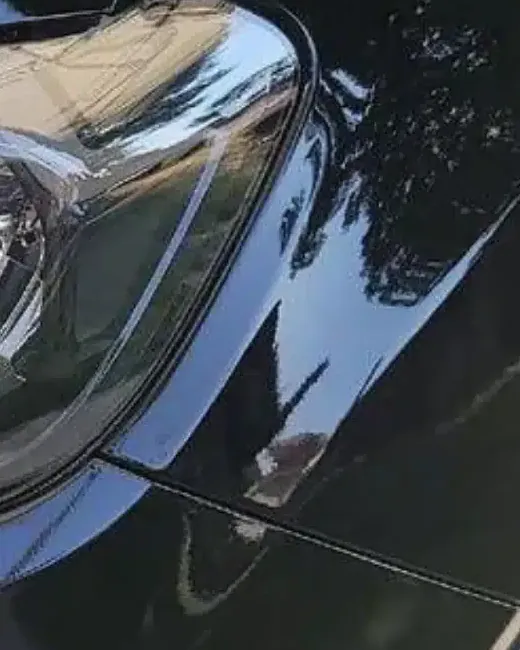
Vinegar is the classic DIY fix for water spots, and it isn’t a myth: it’s a mild acid, and mild acids dissolve minerals. The real questions are whether it’s strong enough for your spots and how to use it without causing new problems.
- Diluted white vinegar can remove light, fresh water spots.
- It usually struggles with baked-on or layered buildup.
- Don’t let it dry on paint, and rinse it off well. It can weaken wax.
- A dedicated remover is made for tougher deposits; neither fixes etching.
Is vinegar safe on car paint?
Used briefly, diluted and rinsed off, vinegar is generally low-risk on modern clear coat. The trouble comes from how people use it: full strength, in the sun, left to dry, or sprayed on and forgotten. Acids that dry on paint keep working as they concentrate, and vinegar can also break down wax and some sealants, leaving the paint unprotected.
Vinegar vs. a water spot remover
| Diluted white vinegar | Dissolve X2 | |
|---|---|---|
| Best for | Light, fresh spots | Bonded water spots, mineral deposits, red dirt, tar, sap, bugs |
| Strength | Mild | Strong acid cleaner (see SDS) |
| Surfaces | Paint and glass, rinsed well | Paint, clear coat, matte, wraps, wheels, chrome, trim, gelcoat |
| Effect on wax | Can weaken or remove it | Plan to re-protect after any deep clean |
| Cost | Very low | Higher |
| Etching | No | No |
How to try vinegar safely
- Wash and dry the car in the shade, on a cool panel.
- Mix it 1:1 with distilled water. Distilled water has no minerals to add new spots.
- Soak a microfiber and lay it on the spot for 30 to 60 seconds. Don’t let it dry.
- Wipe, rinse and dry the area thoroughly.
- Check in good light. If the spots are gone, you’re done. If not, a stronger product is the next step.
Try it on one small spot first. If it does nothing after two careful tries, more vinegar won’t help: the deposits are too bonded for a mild acid.
When to use a dedicated remover
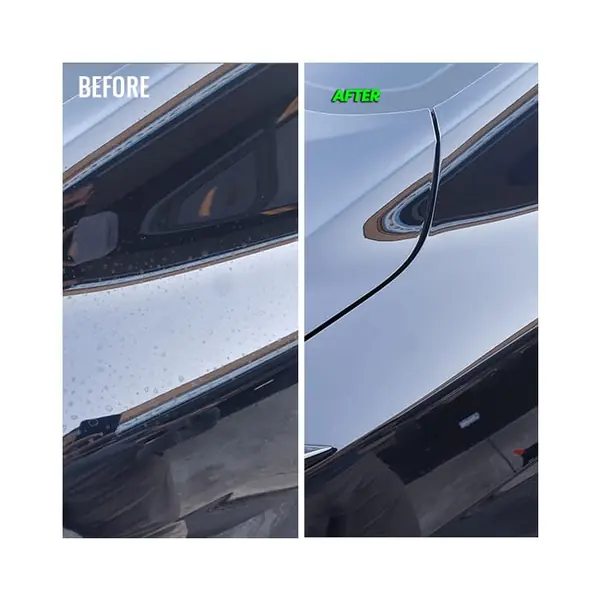
If spots survived a wash, have been baking for weeks, or came from sprinklers or well water, they’re usually too built-up for vinegar. That’s what Dissolve X2 is for. It’s non-abrasive, works by hand, and also takes red dirt, tar, sap and bugs off paint, wheels and trim.
What you’ll need
- Dissolve X2
- Microfiber applicator or towel
- Clean, damp microfiber towels
- Nitrile gloves
- Eye protection
Dissolve X2 is a strong acid cleaner: its Safety Data Sheet lists it as causing severe skin burns and eye damage. Wear gloves and eye protection, keep it off your skin, and read the label before you start. Every sheet is on our SDS page.
- Wash and dry the area and work on a cool panel in the shade.
- Apply a small amount of Dissolve X2 to a microfiber applicator or towel.
- Work it over the stain. Older, heavier spots may need a second pass.
- Wipe clean with a clean, damp microfiber towel and check it in good light.
After either one: protect the paint
Both vinegar and a remover can leave paint bare. A coat of SFX1 mists on and wipes off, and helps water bead and roll off so fewer spots form. For glass spots, use Spotless X2, and see our vinegar vs. Spotless X2 on glass comparison.
New to water spots? Our Water Spot Removal Guide shows every spot type and the right fix for each, with a 30-second quiz.
Common mistakes to avoid
Using full-strength vinegar. Dilute it.
Letting it dry on the paint. Keep it wet, then rinse.
Using tap water to dilute it in a hard water area. You’re adding minerals back.
Mixing vinegar with other cleaners. Never mix acids with bleach.
Forgetting to re-protect. Bare paint spots faster.
A simple care schedule
| When | What to do |
|---|---|
| Every wash | Dry the car fully. |
| When fresh spots appear | Try diluted vinegar, rinsed well. |
| Bonded spots | Dissolve X2. |
| After any spot removal | Protect with SFX1. |
Frequently asked questions
Can vinegar damage car paint?
Diluted, used briefly and rinsed off, it’s generally low-risk on clear coat. Full strength, in the sun or left to dry, it can cause problems and it can weaken wax.
What ratio of vinegar to water for car water spots?
A common starting point is 1:1 white vinegar to distilled water. Test on a small spot first.
Does vinegar remove wax?
It can weaken or remove wax and some sealants, so plan to re-protect the paint after using it.
Is a water spot remover better than vinegar?
For light, fresh spots, vinegar may be enough. For bonded or baked-on deposits, a dedicated remover like Dissolve X2 is made for the job.
Will vinegar remove etched water spots?
No. Etching is damage in the clear coat. Neither vinegar nor a remover can fix it; it needs polishing.
When vinegar isn’t enough
Dissolve X2 removes bonded water spots from paint by hand.