
Two cars can have the same white rings and need completely different fixes. On one, the marks are minerals sitting on top of the paint or glass. On the other, they’ve eaten into it. Knowing which you have saves you time, money and a lot of scrubbing.
- Water spots are mineral deposits sitting on the surface. A water spot remover dissolves them.
- Etching is damage in the surface, left when spots or acidic contaminants sit too long.
- If outlines remain after a proper clean with a remover, it’s likely etching.
- Etching needs polishing (or, on badly damaged glass, replacement), not more cleaner.
Three stages of the same problem
| Stage | What it looks like | The fix |
|---|---|---|
| Fresh spots | White dots or rings that a quick detail spray or wash may lift | Wash and dry the car; spot-treat if needed |
| Bonded mineral deposits | Rings that survive washing and glass cleaner, sometimes a cloudy film | Dissolve X2 on paint, Spotless X2 on glass |
| Etching | Outlines still visible after a proper clean; may feel slightly rough or look like tiny craters | Paint correction (polish) or a glass polish; severe glass etching may need replacement |
Why spots turn into etching
Water spots are what’s left when water evaporates: calcium, magnesium and other minerals. Sun and heat bake them onto the surface, and every new wetting can concentrate them further. Given enough time, deposits and acidic contaminants like bird droppings can mark the clear coat or glass itself. There’s no set timeline: it depends on your water, your climate and how often the car gets wet.
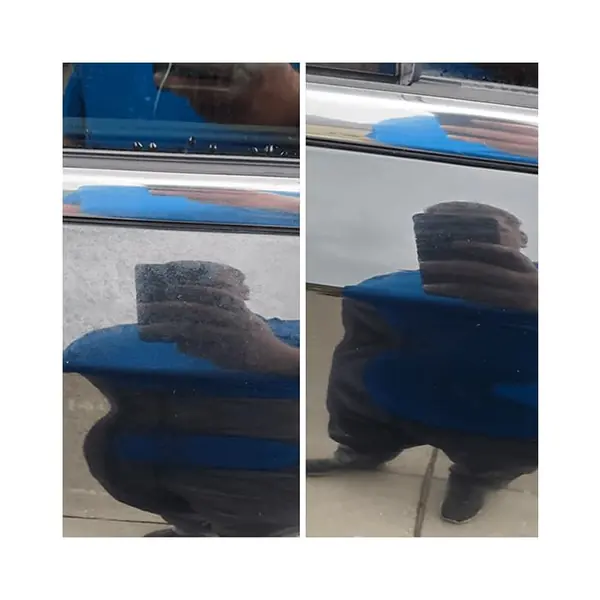

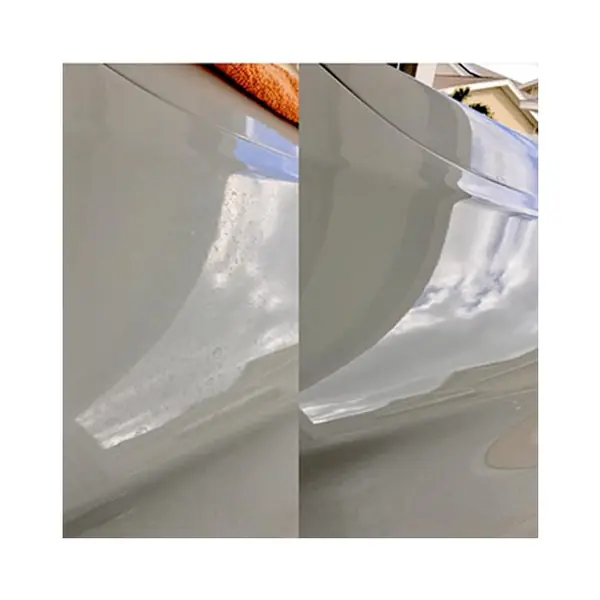
How to tell which one you have
- Wash and dry the area so you’re looking at the surface, not dirt.
- Look in good light. Use direct sun or a flashlight held at an angle. Etching often shows as sharp-edged outlines or tiny craters.
- Feel it. Put your hand inside a thin plastic bag and glide it over the spot. Raised, gritty spots are usually deposits.
- Treat a test spot with the right remover. If the mark is gone, it was deposits. If an outline stays, that part is etching.
Fixing water spots
Spotless X2 and Dissolve X2 are strong acid cleaners: their Safety Data Sheets list them as causing severe skin burns and eye damage. Wear gloves and eye protection and read the labels before you start. Every sheet is on our SDS page.
On paint: use Dissolve X2.
- Wash and dry the area and work on a cool panel in the shade.
- Apply a small amount of Dissolve X2 to a microfiber applicator or towel.
- Work it over the stain. Older, heavier spots may need a second pass.
- Wipe clean with a clean, damp microfiber towel and check it in good light.
On glass: use Spotless X2: a quarter-sized dab on a microfiber pad, cross-hatch, damp wipe, buff dry.
Fixing etching
- Paint: light etching can usually be polished out, because polishing levels the clear coat around the damage. Deeper etching needs a professional paint correction, and very deep marks may not fully come out. See paint correction vs. spot removal.
- Glass: light etching can be polished with a glass polish, often by a pro. Heavy etching on a windshield may mean the glass needs replacing.
Always remove the mineral deposits first. Polishing over minerals just smears them around, and you may find there was much less etching than you feared.
Once the surface is clean, protect it. On SFX1-protected paint and glass, water beads up and rolls off, so less of it is left to dry into new spots.
New to water spots? Our Water Spot Removal Guide shows every spot type and the right fix for each, with a 30-second quiz.
Common mistakes to avoid
Polishing before removing minerals. You take off clear coat you didn’t need to.
Scrubbing harder with a cleaner. If it’s etching, more pressure only adds scratches.
Waiting for the next wash. The longer spots sit, the more likely they etch.
Working in direct sun. Products dry too fast and new spots form while you work.
A simple care schedule
| When | What to do |
|---|---|
| Every wash | Dry everything, including mirrors and trim. |
| Weekly | Look for new spots in good light. |
| As soon as spots appear | Remove them with Dissolve X2 or Spotless X2. |
| After a full clean | Protect with SFX1. |
Frequently asked questions
Can water spots become permanent?
Yes. Left long enough, especially in sun and heat, they can etch paint and glass. Removing them early is the best protection.
Will Dissolve X2 remove etching?
No. Dissolve X2 removes water spots, mineral deposits and stains on the surface. Etching is damage in the surface and needs polishing.
How do I know if my windshield is etched?
If outlines remain after a proper clean with a glass water spot remover like Spotless X2, and they look sharp-edged or feel slightly rough, it’s likely etched.
Can a ceramic coating prevent etching?
A coating adds a protective layer and helps water roll off, which lowers the risk. Coated cars can still spot, so keep drying the car and removing spots early.
Is etching covered by a water spot remover guarantee?
Our removers are made for water spots and mineral deposits. If you aren’t sure what you have, contact us with a photo before you buy.
Paint correction vs spot removal · Can spots damage car glass? · Water spot types on paint
Catch it before it etches
Dissolve X2 removes water spots and mineral deposits from paint by hand.